Protect Biometric Data with Attain Insight Intrinsic
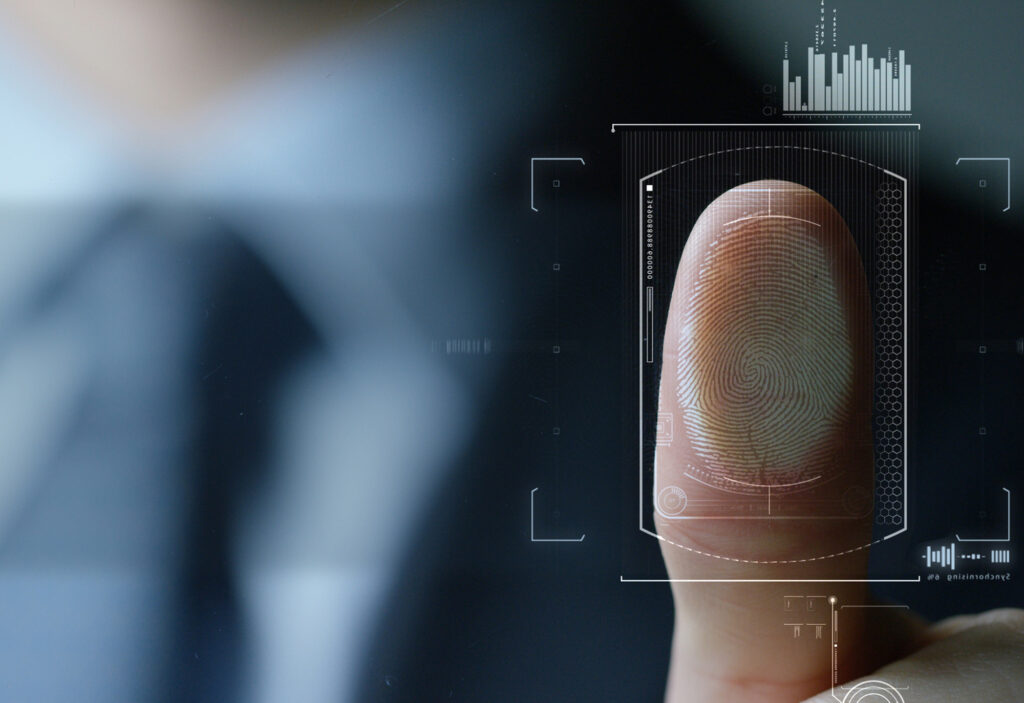
Biometric data (including facial images, fingerprints, iris, voice, and DNA) has many applications. This is in part because a person’s unique physical traits can’t be lost, replicated, or guessed. While some applications of biometric data are good (e.g. improving patient outcomes in healthcare), there is growing concern about the security risks and unauthorized use, coercion of staff by organized crime, and human error when it comes to sensitive Biometric information, especially with the rapidly increasing use of technologies such as Facial Recognition.
Attain Insight Intrinsic, with its Privacy First capabilities, can help with Biometric data in these areas:
Many private and public sector organizations are considering or using facial recognition technologies to meet a wide range of needs. Using biometrics or facial recognition for these purposes subjects organizations to increasingly strict regulation and compliance obligations, including risks of fines and penalties for human error in handling personal data, liability for rights infringements and custodial responsibilities related to collecting and securely storing the personal information that has been collected.
But since today many needs can be satisfied with anonymized data, much of the cost and risk of current approaches can, in many cases, be avoided, and citizens’ rights protected.
Attain Insight Intrinsic is the only solution that applies Search-Preserving Anonymization (SPAn) to biometric inputs, such as fingerprints, facial images, iris scans, and palm prints. This Biometric Privacy-Enhancing Technology (B-PET) approach ensures that high-fidelity identity verification can be performed without any personally identifiable information (PII). With this anonymized data process, the risk of data breaches is mitigated, and it satisfies data minimization principles in many data privacy regulations (such as GDPR).
The benefits of using facial recognition and other biometrics like palm and fingerprints are now well recognized through technologies such as smartphones, access to sensitive building areas such as computer server rooms and keyboard biometrics used for bank tellers and high security applications.
The limitation of most solutions in use today is that the biometric samples contain personal identifying information (PII), i.e. information that links back to an individual. This makes the biometric data sensitive from a security perspective, and therefore, it’s important that this information is not at risk of falling into the wrong hands.
Attain Insight Intrinsic can remove PII from a biometric sample, rendering the sample useless if exposed, and even allowing the anonymized biometric to be reissued, invalidating prior versions. This is because the sample cannot be used to identify an individual. With this important separation, privacy concerns are also significantly reduced. Overall, the risks and obligations related to privacy are significantly reduced.
Since Intrinsic can anonymize biometric data without compromising match accuracy, there is a compelling social obligation to implement high-fidelity anonymization everywhere, from biometric databases to verified credentials. Doing so not only safeguards privacy but also mitigates the risk and cost of managing sensitive biometric data, making it a matter of social sensibility to adopt this practice.
Identity and Relationship Resolution
Biometric data (including facial images, fingerprints, iris, voice, and DNA) is a powerful input into Identity Resolution, since the data on a person’s unique physical traits can’t be lost, replicated, or guessed.
With Intrinsic’s advanced algorithms and analytics, you can use biometric and non-biometric data to attain powerful intelligence into the threats and opportunities that might exist in your organization, your customers, or your community.
Intrinsic uncovers relationships between individuals and groups and individuals with multiple identities. If a pattern is detected, whether involving a good, bad or unknown actor, this optional module proactively generates alerts. Intrinsic establishes relationships between entities, events and timelines in data from any number of sources.
Many organizations want to understand the different audiences that use their facilities. In all these cases, traditional techniques have been problematic because of their use and storage of personally identifying information:
In Retail, managers want to understand how many unique people visited their store, how long did each person stay in the store or in the mall, which shops did they visit, whether they are shopping at their different locations, and if the identity trespassed or was banned from one of their stores.
Educational institutions have many valid groups on campus, such as academic and non-academic staff, service providers as well as undergrad and postgrad students, and then also visitors or guests and of course strangers or those with unknown intent.
High schools finding unauthorized visitors or youth on premise.
Hospitals want to know if persons should be on property, and be able to understand and separate between patients, immediate families and supporters (who sometimes cause trouble but also don’t have a valid reason to be on premise).
Retirement homes have residents, family caregivers, staff, medical professionals, registered and sometimes unregistered visitors or strangers that need to be identified to ensure health and safety of the residents. This could also include dementia-afflicted residents who have left a secure area unintentionally aided by naive visitors.
Higher education trying to respond to the growing business of exam fraud. Is the person presenting themselves to sit this exam actually enrolled in the course?
Retail theft – Are you concerned about individuals not paying? For example, should this person requesting credit be approved to fill up at the pump, take this vehicle for a test drive, or try out this product or clothing item?
Intrinsic from Attain Insight does not store personally identifying information. It is a game changer for needs such as those outlined. Intrinsic allows organizations to implement anonymized identity classification, which will confirm if a person is a member of a classification without retaining or disclosing the individual’s identity.
In addition to identity classification, Intrinsic provides anonymized people-counting analysis capabilities. This feature enables organizations to count the total number of individuals present in a facility and the number of unique visitors over time using only anonymized matching. Retail environments can gain valuable insights into visitor behaviour, improving security, resource allocation, and customer service without compromising privacy
Organizations can leverage anonymized biometric data in various ways while ensuring privacy protection. Some key applications include:
Enhanced Security and Surveillance: Improve security measures by monitoring patterns and behaviours and classifying visitors without identifying individuals.
Public Safety and Law Enforcement: Support public safety initiatives and law enforcement by tracking and analyzing activities to prevent crime and respond to incidents more effectively. Also, enable inter-agency and international collaboration for criminal investigations.
Access Control Systems: Manage access to devices, vehicles, and secure areas by verifying the presence of authorized groups/people without revealing individual identities.
Identity Verification for Registered Workers: Confirm legitimacy without exposing identities for groups including high-net worth individuals, large, registered worker populations (e.g. healthcare or construction), identity-sensitive or dual-identity roles (e.g. undercover officers, intelligence operatives, sex workers, protected witnesses), and sectors exploited by organized crime (e.g. real estate, transportation, finance).
Vulnerable Populations: child exploitation, human trafficking, wellness changes in vulnerable populations, such as children under care.
Marketing: Analyze demographic trends to better understand customer segments and movements, and advertising effectiveness to improve marketing strategies.
Customer Experience Enhancement: Analyze customer behaviour and preferences in retail or service environments, including people-counting and foot-traffic analytics to improve service delivery and optimize layouts or staffing.
Event Management: Enhance crowd management and security at large events by monitoring group movements and behaviours, and performing crowd composition analysis.
Transportation Optimization: Improve public transportation systems by analyzing passenger flow and usage patterns to optimize routes and schedules.
Intrinsic’s new anonymization component, announced in 2024, is the only solution in a new and distinct class of Biometric Privacy Enhancing Technologies (B-PETs) called Search-Preserving Anonymization (SPAn) that significantly reduces regulatory and custodial responsibilities by removing PII while still enabling searching and matching against biometric datasets. Many global privacy regulations implicitly require SPAn by necessitating optimal data minimization. These include the European Union GDPR, California CCPA / CPRA, Texas TDPSA, Utah UCPA, Brazil LGPD, Canada PIPEDA, United Kingdom UK-GDPR, Australia APP and New Zealand IPP.
Attain Insight is a member of the Biometrics Institute, supporting the responsible, ethical, and privacy-preserving use of biometric technologies worldwide.
I am slide content. Click edit button to change this text. Lorem ipsum dolor sit amet, consectetur adipiscing elit. Ut elit tellus, luctus nec ullamcorper mattis, pulvinar dapibus leo.
Amanda LeeCEO
I am slide content. Click edit button to change this text. Lorem ipsum dolor sit amet, consectetur adipiscing elit. Ut elit tellus, luctus nec ullamcorper mattis, pulvinar dapibus leo.
Adam CheiseDesigner
I am slide content. Click edit button to change this text. Lorem ipsum dolor sit amet, consectetur adipiscing elit. Ut elit tellus, luctus nec ullamcorper mattis, pulvinar dapibus leo.